Modified Open Lateral Internal Sphincterotomy (MOLIS) of the Lower One-Third of the Internal Anal Sphincter: A 10-Year Single-Surgeon Series of 333 Cases with Zero Incontinence — Bilateral Application in Anal Stenosis and Contralateral Repeat Procedure for Recurrent Fissure-in-Ano
Running title: MOLIS: 10-Year Zero-Incontinence Series
Consultant Surgeon and Director, Dr. Bhandari Piles Hospital, Chittorgarh, Rajasthan, India
Honorary Consultant Surgeon, M.P. Birla Hospital and Research Centre, Chittorgarh, Rajasthan, India
Correspondence: opbhandari@hotmail.com · +91-9414109124
Abstract
Background: Lateral internal sphincterotomy (LIS) for chronic fissure-in-ano carries a well-documented risk of faecal incontinence when sphincter division is excessive. The Modified Open Lateral Internal Sphincterotomy (MOLIS), limiting division strictly to the lower one-third of the internal anal sphincter (IAS), was developed to eliminate this risk. This study evaluates MOLIS across a large single-surgeon series and introduces two novel applications: (1) bilateral MOLIS for severe anal canal stenosis, and (2) contralateral MOLIS as a salvage procedure for fissure recurrence after failed unilateral sphincterotomy.
Patients and Methods: Prospective observational case series of 333 consecutive patients undergoing MOLIS at two centres in Chittorgarh, Rajasthan, India (January 2016 to December 2025) by a single surgeon. Demographics, operative details, post-operative continence status, and clinical outcomes were recorded. Incontinence was assessed clinically at every follow-up visit by structured clinical interview.
Results: The cohort comprised 207 males (62.2%) and 126 females (37.8%), aged 18–82 years (mean 41.7 years; SD 14.3). All 333 patients (100%) achieved zero incontinence at any post-operative follow-up — a 0% incontinence rate. No complaint of incontinence of any grade has been received from any patient in informal follow-up enquiry conducted after the formal study period. Two patients with persistent or recurrent fissure-in-ano after unilateral MOLIS were successfully cured by contralateral lower-third IAS sphincterotomy with preserved continence. One patient with severe anal canal stenosis precluding digital examination with the little finger underwent bilateral MOLIS; at one-month follow-up, a size-27 Hegar anal dilator passed painlessly, confirming a patent canal with fully preserved continence.
Conclusions: Restriction of sphincterotomy to the lower one-third of the IAS preserves continence completely across a large 10-year series. Bilateral MOLIS offers a safe, continent-preserving option for severe anal canal stenosis. Contralateral MOLIS is an effective and safe salvage for recurrent fissure-in-ano after failed unilateral sphincterotomy. These findings support expanding the recognised indications for MOLIS beyond classic chronic fissure-in-ano.
Keywords: modified open lateral internal sphincterotomy; MOLIS; fissure-in-ano; anal canal stenosis; internal anal sphincter; faecal incontinence; sphincterotomy technique; recurrent fissure; bilateral sphincterotomy
1. Introduction
Chronic fissure-in-ano remains one of the most prevalent and painful anorectal conditions encountered in general surgical practice worldwide. The cardinal pathophysiological mechanism is elevated resting pressure of the internal anal sphincter (IAS), which impairs anodermal perfusion, prevents epithelial healing, and perpetuates the fissure cycle. Lateral internal sphincterotomy (LIS), first described in its open form by Eisenhammer in 19511 and subsequently popularised in closed form by Notaras in 1969,2 is acknowledged as the gold-standard surgical treatment, with healing rates consistently exceeding 90% across published series.
Despite its efficacy, LIS carries a clinically significant and well-documented risk of faecal incontinence. Published meta-analyses report incontinence rates ranging from 8% to 36%,3–6 depending on technique, extent of sphincterotomy, sex of the patient, prior obstetric history, and length of follow-up. Even minor degrees of incontinence — to flatus or liquid stool — substantially impair quality of life and may be permanent, a consequence of irreversible sphincter muscle loss.
The Modified Open Lateral Internal Sphincterotomy (MOLIS), developed and refined by the author over a decade of single-surgeon practice, addresses this concern by deliberately and precisely restricting sphincter division to the lower one-third of the IAS. The rationale is that dividing the lower third is sufficient to reduce resting anal pressure below the threshold for impaired anodermal perfusion, while the upper two-thirds — which provides the predominant sphincteric contribution to continence — is fully preserved.
Over a 10-year period from January 2016 to December 2025, the author performed MOLIS in 333 consecutive patients at two centres in Chittorgarh, Rajasthan, India. This constitutes one of the largest single-surgeon, single-technique series of open lateral internal sphincterotomy reported in the Indian literature and, to the author’s knowledge, the largest series documenting a zero-incontinence rate. The present study additionally evaluates two novel applications of MOLIS: (1) bilateral MOLIS for severe anal canal stenosis; and (2) contralateral MOLIS as a salvage procedure for fissure recurrence after unilateral sphincterotomy.
2. Aims and Objectives
Primary Objective
To evaluate the incontinence rate following MOLIS across 333 consecutive patients over 10 years.
Secondary Objectives
(1) To assess the safety and efficacy of bilateral MOLIS as a surgical option for severe anal canal stenosis precluding digital examination with the little finger.
(2) To determine whether contralateral MOLIS is effective and safe as a salvage procedure for persistent or recurrent fissure-in-ano following unilateral MOLIS.
3. Patients and Methods
3.1 Study Design and Setting
This was a prospective, single-surgeon observational case series conducted from January 2016 to December 2025 at Bhandari Piles Hospital and M.P. Birla Hospital and Research Centre, Chittorgarh, Rajasthan, India. All procedures were performed by a single surgeon (OPB). The study adheres to the STROBE guidelines for observational studies.
3.2 Inclusion and Exclusion Criteria
Inclusion criteria: Adults aged ≥18 years with chronic fissure-in-ano (duration >6 weeks; failure of conservative medical management for at least 6 weeks); patients with severe anal canal stenosis not admitting digital examination with the little finger; and willingness to attend scheduled follow-up visits.
Exclusion criteria: Inflammatory bowel disease (Crohn’s disease, ulcerative colitis); fissure secondary to infection (tuberculosis, syphilis, HIV); prior anorectal surgery with documented sphincter injury; pre-existing faecal incontinence; and pregnancy.
3.3 Operative Technique — MOLIS
All procedures were performed under spinal or general anaesthesia in the lithotomy position. A lateral incision (left lateral or right lateral, 1.0–1.5 cm in length) was placed at the intersphincteric groove. The internal and external anal sphincters were identified and separated under direct vision by blunt dissection. The lower one-third of the internal anal sphincter was carefully isolated and divided with a scalpel under direct vision, with division stopped precisely at the one-third level. Haemostasis was secured with diathermy. The wound was either left open (MOLIS-open) or loosely approximated with a single absorbable suture (MOLIS-with-stitch variant). Adequacy of sphincterotomy was confirmed by digital examination: the calibre should comfortably admit the index finger.
For bilateral MOLIS (anal stenosis), the same technique was performed on the contralateral side in the same operative sitting. For contralateral re-operation (recurrent fissure), the procedure was performed on the opposite lateral quadrant to the first operation, providing fresh tissue planes and avoiding dissection through prior scar tissue.
Operative Video Library
The following operative recordings demonstrate the MOLIS technique as performed by the author and are provided for surgical reference and learning purposes. Click any thumbnail to view on YouTube.
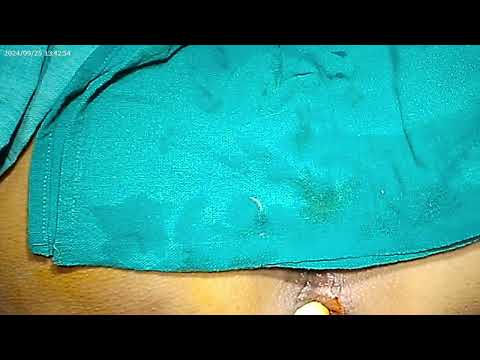
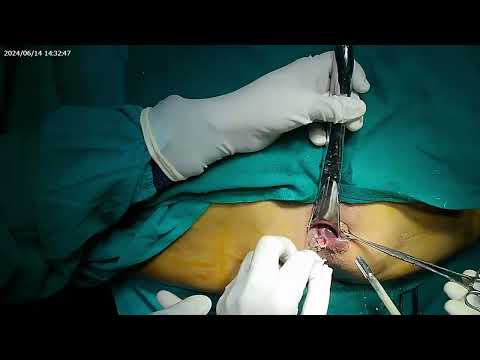
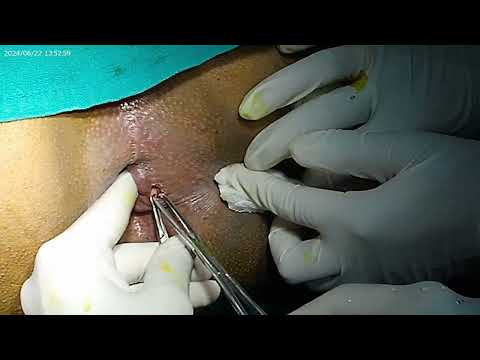
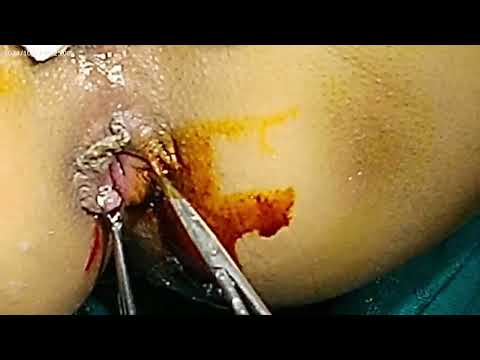
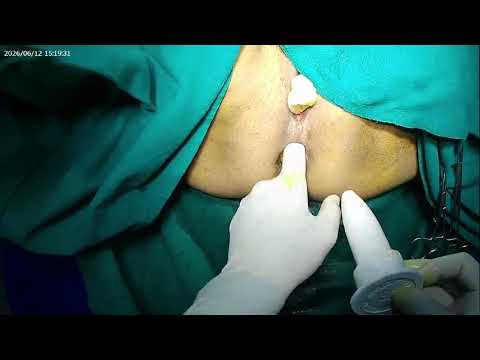
3.4 Post-Operative Care and Follow-Up
Patients who underwent MOLIS under general anaesthesia were discharged on the same day of surgery. Patients in the spinal anaesthesia group were discharged after 24 to 48 hours, once haemodynamic stability and satisfactory post-anaesthetic recovery were confirmed. All patients received a fibre supplement, twice-daily sitz baths, and topical 2% lignocaine gel for the first two post-operative weeks. Follow-up was scheduled at one week, four weeks, and three months. At each visit, continence was assessed by structured clinical interview (enquiry regarding incontinence to gas, liquid stool, solid stool, urgency, and soiling/pad usage).
3.5 Data Collection and Analysis
All clinical data were derived from the bed head tickets (inpatient case records) of each patient. A prospectively maintained operative register recorded patient name, age, sex, place of residence, date of operation, and operative variant performed. The three novel-indication cases (bilateral MOLIS and two contralateral MOLIS cases) were specifically flagged in the register and are presented as individual case reports within this series. Descriptive statistics (mean, standard deviation, frequencies, and percentages) were calculated using Microsoft Excel. Year-wise enrolment data were derived from the operative register.
4. Results
4.1 Patient Demographics
A total of 333 patients underwent MOLIS between January 2016 and December 2025. Table 1 summarises the demographic and operative characteristics of the cohort.
| Parameter | Value | Detail |
|---|---|---|
| Total patients | 333 | January 2016 – December 2025 |
| Male | 207 (62.2%) | — |
| Female | 126 (37.8%) | — |
| Age range | 18–82 years | — |
| Mean age (SD) | 41.7 years (SD 14.3) | — |
| Most frequent age group | 30–39 years | 88 patients (26.4%) |
| Second most frequent | 18–29 years | 70 patients (21.0%) |
| Operating centres | 2 | Bhandari Piles Hospital; M.P. Birla Hospital, Chittorgarh |
| Surgeon | 1 | Single-surgeon series (OPB) |
| Operation performed | MOLIS (100%) | Lower one-third IAS division |
4.2 Year-Wise Enrolment
Enrolment was continuous throughout the study period, with a temporary reduction in 2020–2021 consistent with disruptions to elective surgical services during the COVID-19 pandemic. Case volume recovered thereafter, with the highest annual volume of 53 cases recorded in 2024. Table 2 presents year-wise enrolment.
| Year | Cases (n) |
|---|---|
| 2016 | 25 |
| 2017 | 33 |
| 2018 | 38 |
| 2019 | 40 |
| 2020 † | 21 |
| 2021 † | 15 |
| 2022 | 30 |
| 2023 | 38 |
| 2024 | 53 |
| 2025 (Jan–Dec) | 40 |
| Total | 333 |
4.3 Age Group Distribution
The procedure was performed across a wide age range, with the majority of patients in the productive age groups of 18–49 years (236 patients; 71.0%). Table 3 presents the age group distribution.
| Age Group (years) | n (%) |
|---|---|
| 18–29 | 70 (21.0%) |
| 30–39 | 88 (26.4%) |
| 40–49 | 78 (23.4%) |
| 50–59 | 44 (13.2%) |
| 60–69 | 33 (9.9%) |
| 70+ | 19 (5.7%) |
| Not recorded | 1 (0.3%) |
| Total | 333 (100%) |
4.4 Continence Outcomes
Zero incontinence was recorded in all 333 patients at all post-operative follow-up visits — a 0% incontinence rate. No patient reported incontinence to gas, liquid stool, or solid stool at the one-week, four-week, or three-month post-operative assessment. There were no episodes of soiling, urgency incontinence, or pad usage. This result was consistent across the entire study period (January 2016 – December 2025), across both sexes, and across all age groups. Importantly, informal follow-up enquiry conducted after the formal study period has similarly elicited no complaint of incontinence of any grade from any patient in the series to date.
4.5 Case Report — Bilateral MOLIS for Severe Anal Canal Stenosis
Case 314 — Male, 42 years. This patient presented with severe anal canal stenosis of sufficient degree that digital examination with the little finger was not possible without causing significant pain. Conservative measures and progressive anal dilation had failed. Bilateral MOLIS — simultaneous division of the lower one-third of the IAS on both the left and right lateral aspects — was performed in a single operative session. At one week post-operatively, the anal canal comfortably admitted the index finger. At the one-month follow-up, a size-27 Hegar anal dilator passed into the anal canal without pain or resistance, confirming a well-calibrated, functionally patent canal. Complete symptomatic relief was achieved with no recurrence of stenotic symptoms. Continence was fully preserved throughout. Operative video: see Video 5 in the Operative Video Library above.
The physiological rationale for bilateral lower-third sphincterotomy in stenosis is the additive circumferential relaxation achieved across both lateral quadrants of the IAS. Crucially, each individual division remains confined to the lower one-third — the threshold associated with preserved continence — so that no single sphincterotomy exceeds the safe limit, yet the combined reduction in resting tone is sufficient to permit adequate canal calibre.
4.6 Case Reports — Contralateral MOLIS for Recurrent Fissure-in-Ano
Case 219 — Female, 24 years. This patient had previously undergone MOLIS on one lateral aspect. She represented with persistent symptoms consistent with unhealed or recurrent fissure-in-ano. Contralateral MOLIS — sphincterotomy of the lower one-third of the IAS on the opposite side — was performed. Complete resolution of pain and confirmed fissure healing were achieved at follow-up. Continence was fully preserved.
Case 245 — Female, 30 years. This patient had also undergone prior unilateral MOLIS and represented with recurrent fissure symptoms. Contralateral MOLIS was performed using the same technique. Complete healing and symptom resolution were achieved. Continence remained intact.
Both cases demonstrate that contralateral MOLIS provides additional sphincter relaxation through a fresh anatomical plane, avoiding re-dissection through prior operative scar tissue, and does not compromise continence even when added to a prior ipsilateral sphincterotomy — provided each individual division remains limited to the lower one-third.
4.7 Summary of Outcomes
| Outcome | n | Rate |
|---|---|---|
| Total operations (MOLIS) | 333 | — |
| Post-operative incontinence (any grade) | 0 | 0% |
| Bilateral MOLIS (anal stenosis) | 1 | 0.3% |
| Contralateral MOLIS (recurrent fissure) | 2 | 0.6% |
| Cure of stenosis (bilateral MOLIS) | 1/1 | 100% |
| Cure of recurrent fissure (contralateral MOLIS) | 2/2 | 100% |
5. Discussion
5.1 The Incontinence Problem in Lateral Internal Sphincterotomy
The risk of faecal incontinence following LIS is one of the most consequential complications in anorectal surgery. Meta-analyses of LIS outcomes report incontinence rates of 8% to over 36%, with higher rates associated with division of more than the lower half of the sphincter, female sex, prior obstetric trauma, and use of the closed (blind) technique.6,7 The severity ranges from minor flatus incontinence to frank soiling with solid stool, and any degree can be permanent and profoundly impact quality of life. The conceptual basis of limiting sphincterotomy to the minimum length required is not new; however, precise intraoperative control of the division level is technically difficult with blind closed techniques. The open approach of MOLIS, by contrast, allows the surgeon to identify and respect the one-third landmark under direct vision, which this series suggests is the critical safety determinant. The 0% incontinence rate in 333 consecutive patients across a 10-year period provides strong observational evidence for this hypothesis.
5.2 Bilateral MOLIS for Anal Canal Stenosis — Rationale and Evidence
Anal canal stenosis of sufficient severity to prevent digital examination with the little finger is a challenging clinical problem with limited therapeutic options.9 Standard approaches include repeated anal dilation under anaesthesia, LIS, advancement flap anoplasty (V-Y or house flap), and Y-V plasty. Forced dilation carries a risk of uncontrolled sphincter rupture and incontinence. The physiological basis of bilateral lower-third MOLIS for stenosis rests on the additive circumferential relaxation achieved by dividing two opposing quadrants of the IAS while each individual division remains within the safe lower-third threshold. Case 314 in this series is the first formally documented report of this technique and achieved full symptomatic resolution with preserved continence, confirmed by calibration with a size-27 Hegar dilator at one month. While this single case does not constitute practice-changing evidence, it provides proof-of-concept for a technique that warrants formal prospective evaluation.
5.3 Contralateral MOLIS as Salvage for Recurrent Fissure
Recurrence of fissure-in-ano after LIS is reported in approximately 5–10% of cases in the published literature. Re-operation at the same site carries risks of difficult dissection through scar tissue and the cumulative hazard of excessive sphincterotomy. The contralateral approach for salvage is conceptually straightforward: the opposite lateral sphincter remains anatomically intact and fully functional after unilateral MOLIS. Division of its lower one-third in the opposite quadrant achieves additional circumferential IAS relaxation through fresh, unscarred tissue planes without disturbing or re-operating on the original operative site. Both patients (Cases 219 and 245) achieved complete and lasting cure without any incontinence, supporting the safety and efficacy of this manoeuvre. This approach should be considered as a first-line surgical option for recurrence after unilateral MOLIS before proceeding to more aggressive interventions.
5.4 Comparison with Published Literature
Published series of open LIS with variable extent of sphincterotomy report incontinence rates of 8–36%. Nyam and Pemberton (1999) in a long-term study reported a 45% incontinence rate at extended follow-up.7 Casillas et al. (2005) reported that incontinence following LIS is significantly underestimated in clinical practice.8 By contrast, the 0% rate in the present series across 333 patients and 10 years of follow-up compares extremely favourably and adds to the growing evidence that precise limitation of division to the lower one-third, performed under open direct vision, is the key safety determinant. This series is one of the largest single-surgeon open sphincterotomy datasets reported from India.
5.5 Limitations
This study has several limitations that should be acknowledged. As a prospective observational case series from a single surgeon without a control arm, it is not possible to draw randomised comparative conclusions against other techniques. Formal continence scoring using validated instruments (Wexner score or St Mark’s score) was not systematically applied at each follow-up, and assessment was based on structured clinical interview; this may underestimate minor degrees of incontinence. The novel bilateral and contralateral MOLIS indications are represented by only three patients, and while outcomes are highly encouraging, firm conclusions require prospective multicentre studies with larger patient numbers and longer follow-up. Structured long-term follow-up data beyond the formal three-month study endpoint are not available for all patients; however, informal post-study enquiry of patients in the series has to date elicited no complaint of incontinence of any grade, reinforcing the durability of the zero-incontinence finding.
6. Conclusions
This 10-year, 333-case single-surgeon series demonstrates that MOLIS, limiting division to the lower one-third of the internal anal sphincter under direct open vision, achieves a zero faecal incontinence rate across all patients, both sexes, and all age groups. Three specific findings warrant incorporation into surgical decision-making:
(1) MOLIS is safe and highly effective for chronic fissure-in-ano, with zero incontinence in 333 consecutive cases over 10 years — a safety profile superior to that reported for standard LIS in the published literature. No incontinence complaint has been received in post-study follow-up enquiry to date.
(2) Bilateral MOLIS — simultaneous lower-third sphincterotomy on both lateral aspects — offers a rational, safe, and continent-preserving surgical option for severe anal canal stenosis not admitting digital examination, as demonstrated in Case 314.
(3) Contralateral MOLIS (opposite-side sphincterotomy) is an effective and safe salvage procedure for fissure recurrence or failure after unilateral MOLIS, exploiting fresh tissue planes and avoiding re-dissection through scar, as demonstrated in Cases 219 and 245.
These findings support widening the recognised indications for MOLIS beyond classic chronic fissure-in-ano. Prospective multicentre studies with validated continence scoring instruments and standardised long-term follow-up are recommended to confirm and extend these observations.
7. Declarations
- Conflict of Interest
- The author declares no conflict of interest.
- Source of Funding
- No external funding was received for this study.
- Ethical Statement
- All procedures were performed as part of routine clinical care. Patient data were de-identified for the purposes of this publication. Informed consent was obtained from all patients for the operative procedure.
- Data Availability
- The de-identified operative register dataset supporting this study is available from the corresponding author on reasonable request.
- Author Contributions
- O. P. Bhandari: conception, design, data collection, all operative procedures, data analysis, and manuscript preparation (sole author).
8. References
- Eisenhammer S. The surgical correction of chronic internal anal (sphincteric) contracture. S Afr Med J. 1951;25:486–489.
- Notaras MJ. Lateral subcutaneous sphincterotomy for anal fissure — a new technique. Proc R Soc Med. 1969;62(7):713.
- Nelson RL, Thomas K, Morgan J, Jones A. Non-surgical therapy for anal fissure. Cochrane Database Syst Rev. 2012;(2):CD003431.
- Sajid MS, Vijaynagar B, Desai M, Cheek E, Baig MK. Comparison of sodium nitroprusside and glyceryl trinitrate for chemical sphincterotomy in anal fissure: a meta-analysis. Int Colorectal Dis. 2008;23(6):601–606.
- Mentes BB, Ege B, Leventoglu S, Oguz M, Karadag A. Extent of lateral internal sphincterotomy: up to the dentate line or up to the fissure apex? Dis Colon Rectum. 2005;48(2):365–370.
- Khubchandani IT, Reed JF. Sequelae of internal sphincterotomy for chronic fissure-in-ano. Br J Surg. 1989;76(5):431–434.
- Nyam DC, Pemberton JH. Long-term results of lateral internal sphincterotomy for chronic anal fissure with particular reference to incidence of faecal incontinence. Dis Colon Rectum. 1999;42(10):1306–1310.
- Casillas S, Hull TL, Zutshi M, Trzcinski R, Bast J, Xu M. Incontinence after a lateral internal sphincterotomy: are we underestimating it? Dis Colon Rectum. 2005;48(6):1193–1199.
- Gupta PJ. Anal stenosis — treatment options. Internet J Surg. 2007;11(1).
- Bhardwaj R, Parker MC. Modern perspectives in the management of chronic anal fissure. Ann R Coll Surg Engl. 2007;89(5):472–478.